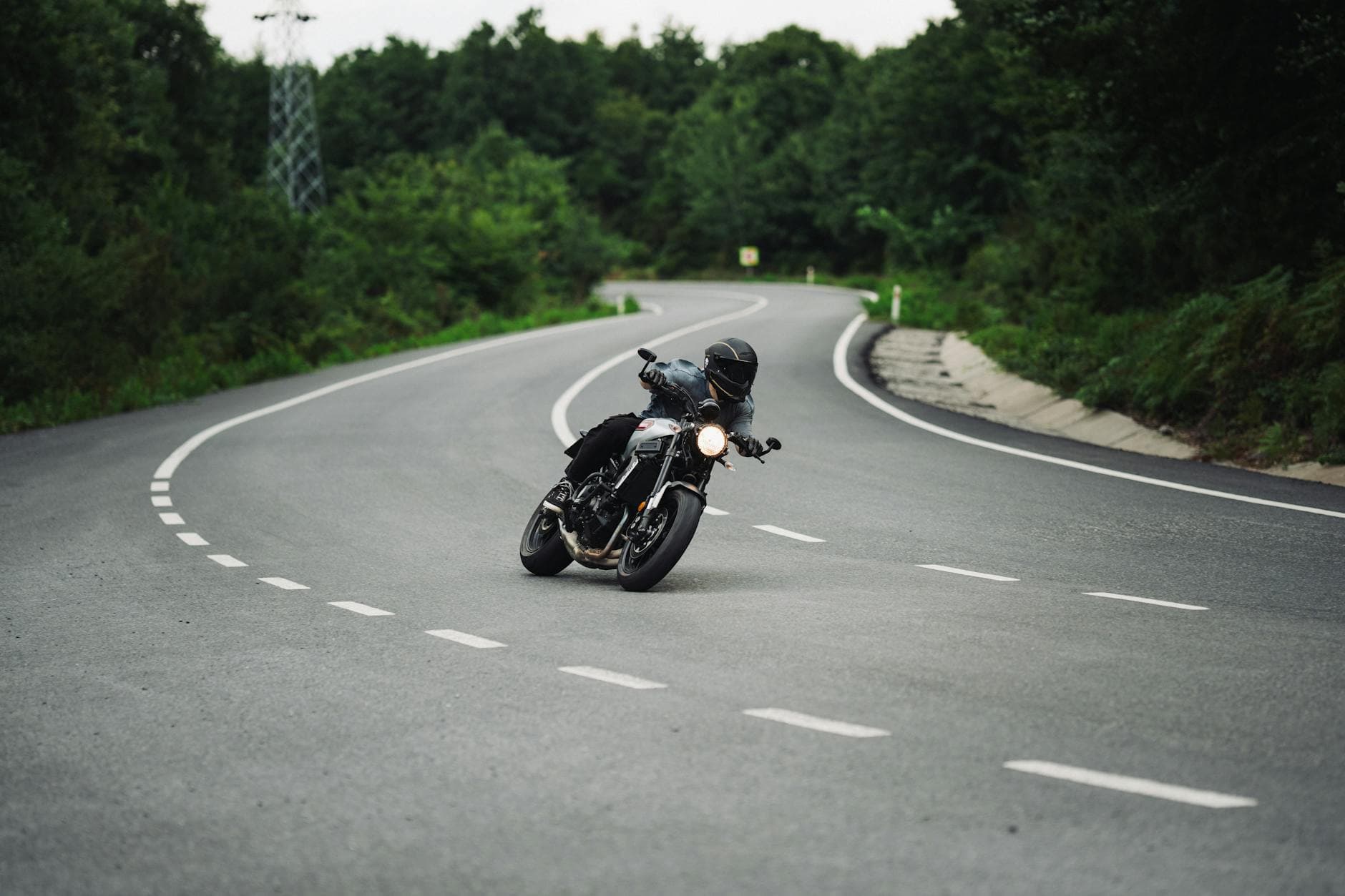
 Photo: cnrdmroglu / Pexels / Pexels License
Germany — Schwarzwald
The Black Forest High Road — Germany's Classic Schwarzwald Loop
Key highlights
- B500 Schwarzwaldhochstrasse — the high road from Baden-Baden to Freudenstadt, mostly above 800m
- Feldberg (1,493m) — highest point in the Black Forest, sweeping climb on the B317
- Triberg waterfalls and the Black Forest Highway turnoffs at Hornberg
- Titisee and Schluchsee lakes — open valley roads through dense conifer forest
- Donaueschingen — source of the Danube, natural stop on the southern leg
The Black Forest is the classic southern Germany ride. The B500 — the Schwarzwaldhochstrasse — has been on biker bucket lists for half a century, and for good reason: a sustained ridge road through dense conifer forest, with elevation, sweepers, and a rhythm that rewards a steady pace rather than a chase. A 240km loop from Baden-Baden down the B500 and back via the Feldberg and Titisee covers the best of the region in a long day.
The B500 Itself
Start in Baden-Baden, on the western edge of the forest. The B500 climbs immediately out of town and within twenty minutes you are on the Schwarzwaldhochstrasse proper — a wide, well-surfaced ridge road that holds elevation between 800 and 1,000 metres for most of its length down to Freudenstadt. The road is a sequence of long sweepers and gentle gradients rather than tight technical work, and the surface is consistently good. Layby views to the Rhine valley appear regularly on the western side; on a clear day the Vosges in France are visible.
The B500 is busy on summer weekends with a mix of bikers, classic-car clubs, and campervans heading for the Mummelsee — a small mountain lake with a large car park and a touristy hotel. The bikers come early, the campervans come late, so a 9am start in summer puts you ahead of the slowest traffic. Mid-week through May and September the road is quiet and the riding is genuinely outstanding.
Hornberg, Triberg, and the Detour
From Freudenstadt the route turns east on the B294 then south through Hornberg and Triberg. This is the heart of the cuckoo-clock Black Forest and the towns embrace it without apology. Hornberg sits in a tight valley with switchback exits in three directions; Triberg has Germany's highest waterfalls (a 163-metre cascade through seven stages) and a half-decent old town to walk through while the bike cools down.
The detour worth taking from Triberg is the B33 east toward Villingen-Schwenningen, picking up the B27 south to Donaueschingen. The source of the Danube is a small spring in the palace park — modest but oddly affecting given what the river becomes. From Donaueschingen the route swings west again on quieter roads through the Hochschwarzwald.
Feldberg and the Lakes
The southern Black Forest is built around the Feldberg, at 1,493 metres the highest peak of the range. The B317 climb from Todtnau to the Feldbergpass is the most demanding road of the loop — narrower than the B500, more technical, with several genuinely steep sections. The summit area has parking and short walks if you need to stretch.
From the Feldberg, drop east to the Titisee — a glacial lake busy with tourists in summer but with a perfectly rideable lakeside loop. The Schluchsee, slightly south, is larger and quieter. Both are surrounded by accommodation that caters to bikers, and the lake roads connect to a network of forest back roads that work well for a slower afternoon if you have the time.
The Roads
Road quality across the Schwarzwald is consistently high — Baden-Württemberg maintains its B-roads to a standard noticeably above the German average. Surfaces are smooth, sightlines are good through the forest sections, and the camber on the older switchbacks (around Hornberg, on the Feldbergpass) is well-judged for a relaxed pace. There is no need to ride hard to enjoy the Black Forest; the layout does the work.
Police presence is regular but predictable — speed-trap locations are known and posted on biker forums. The B500 is not a road to discover the limits of a sportbike on; the rewards are in the rhythm rather than the velocity.
When to Go
May through October is the standard season. The Feldbergpass can carry snow into late April and from early November, so check conditions if riding shoulder-season. May offers the best balance of light, road conditions, and lower traffic. September brings autumn colour through the deciduous lower forest and uncrowded roads. July and August are fine but the Mummelsee, Triberg, and Titisee carparks are full from mid-morning.
Where to Stay
Baiersbronn, Freudenstadt, Titisee-Neustadt, Hornberg, and St. Blasien all have biker-friendly accommodation with secure parking and hosts who handle motorcycle traffic as routine. The forest hotels tend to take a more traditional German approach (early breakfast, generous portions, evening meals served until 9pm) which suits a ride day well.
Browse the full list of Black Forest biker-friendly accommodation in our directory. The region pairs naturally with the Mosel and Eifel to the north for a longer German tour, or with the Vosges in eastern France for a cross-border weekend.