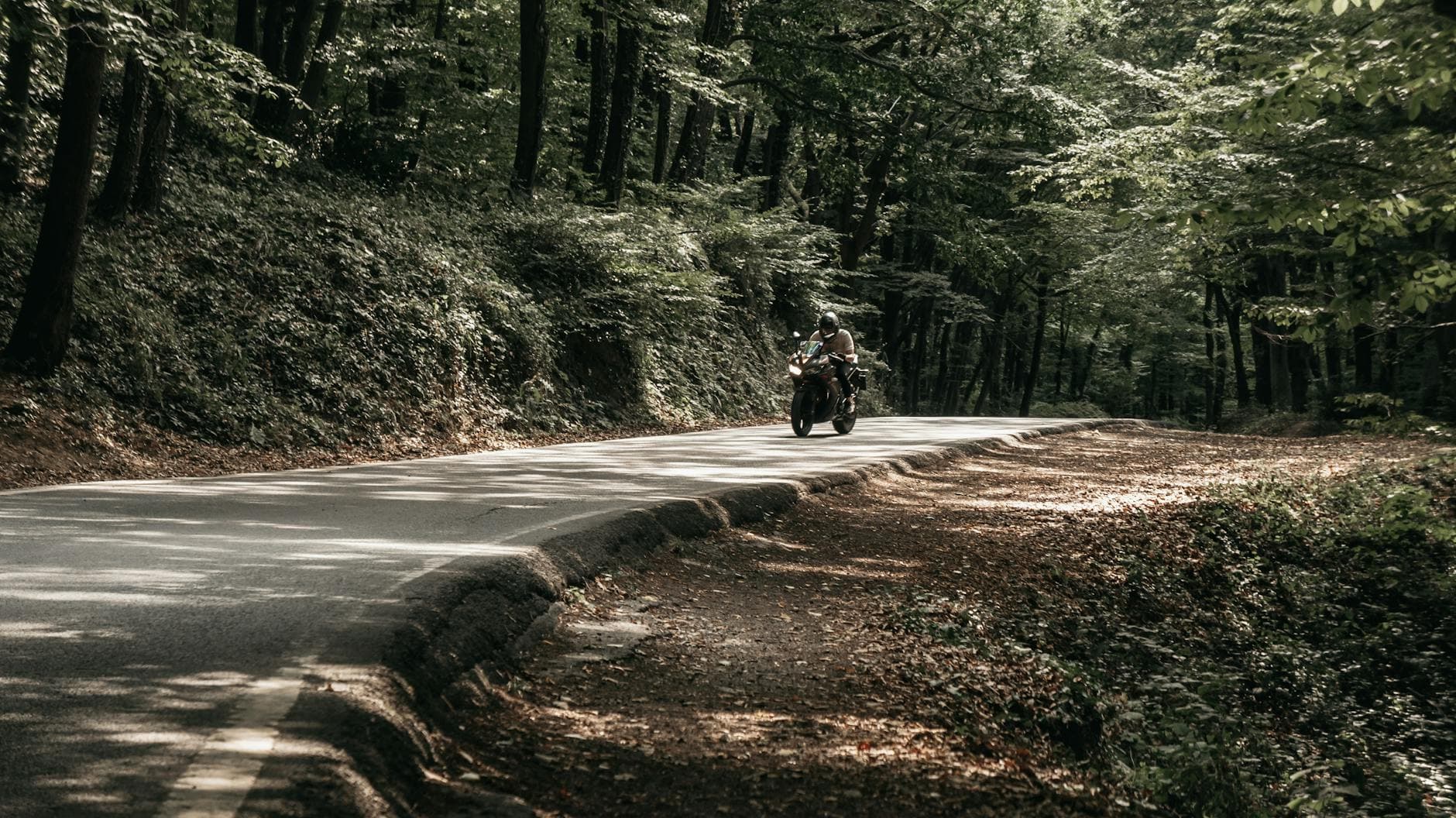
 Photo: Ikbal Alahmad / Pexels / Pexels License
Portugal — Northern Portugal
Serra da Estrela by Motorcycle: Ride to the Torre, Portugal's Highest Road
Key highlights
- The Torre at about 1,993m: the highest point in mainland Portugal, with a road to the top
- The climb from Covilhã past Penhas da Saúde: a long run of bends above the Beira plains
- Zêzere glacial valley: a U-shaped valley down to the mountain town of Manteigas
- Lagoa Comprida reservoir and the descent to Seia on the western side
- Summit roads can close for snow in winter and early spring: check before you ride
Portugal is not known for mountain passes, which makes the Serra da Estrela a surprise. In the middle of the country, between the Douro and the Tagus, a granite massif rises to nearly 2,000 metres, and a road goes all the way to the top. The Torre, at about 1,993 metres, is the highest point in mainland Portugal, and the climb to it from either side is a proper mountain ride: long sweeping bends, a few hairpins, open moorland and big views over the plains. Add the glacial valley down to Manteigas and you have a full day of riding in a small area.
Planning a Serra da Estrela trip
Covilhã, on the south-eastern side of the mountains, is the best base: a university town with fuel, food and rooms, and the summit road starts from the top of the town. Manteigas, in the valley on the northern side, is quieter and has more of a mountain village feel. Seia and Gouveia work well if you arrive from the west or north. One full day covers the loop below; two nights let you add the schist villages to the south or the walled villages near the Spanish border.
From Porto it is roughly three hours to Covilhã by motorway (the A25 and A23) or a full day on national roads via the Douro (see the Douro N222 guide). From Spain, the A25 from the border at Vilar Formoso gets you to Guarda, at the northern edge of the range, in under an hour. Portuguese motorways are tolled and many use electronic gantries only, so sort out a toll option for your bike before you use them.
The loop (about 170km)
Covilhã to the Torre (about 20km). Leave Covilhã uphill toward Penhas da Saúde. The road climbs steadily through pine woods and then out onto open granite slopes, with the town and the Cova da Beira plain dropping away behind you. It is a road of long, open bends with good sight lines, the kind you can ride smoothly for half an hour. Above Penhas da Saúde the landscape turns to rock, heather and small lakes, and the road reaches the Torre plateau. There is not much on the summit itself, a few buildings and the remains of old radar domes, but the view on a clear day stretches across half of central Portugal.
Torre to Manteigas through the Zêzere valley (about 30km). Drop north from the plateau toward the source of the Zêzere river and follow the road down its glacial valley to Manteigas. The valley is a classic U shape, carved by ice, with steep walls and a flat floor, and the road works its way down in a mix of hairpins and long bends. Manteigas sits at the bottom, a small town of stone houses, and makes a good lunch stop.
Manteigas to Gouveia and Seia (about 50km). From Manteigas, climb out of the valley to the west and ride the mountain roads across to Gouveia, then along the north-western foot of the range to Seia. These roads are quieter and narrower, through pine and chestnut woods and small villages. Seia has a bread museum, and every village sells Serra da Estrela cheese, one of Portugal's best known.
Seia back over the top via Lagoa Comprida (about 45km). From Seia, climb back toward the summit on the western side, past Sabugueiro and the Lagoa Comprida reservoir. This is the second great climb of the day, with wide views west over the Mondego valley. Rejoin the summit plateau at the Torre and drop back down the familiar road to Covilhã, now riding the bends in the other direction.
Optional: south to the schist villages (about 25km and up). If you still have light, the hills south-west of Covilhã hide villages built of dark schist stone, linked by twisting roads with almost no traffic.
Weather and closures
The Serra da Estrela has a real mountain climate. The summit roads between Piornos, the Torre and Lagoa Comprida are closed to traffic when snow falls, which can happen from late autumn well into spring. Closures are usually announced by the road operator, Infraestruturas de Portugal, and often lifted the next morning once the road is cleared, but in a heavy winter some stretches stay shut for days. Even in summer, the plateau can be ten degrees colder than Covilhã, and cloud can sit on the top while the plains are in sunshine. Pack a warm layer and waterproofs whatever the forecast in the valley says.
The roads
The main climbs are well surfaced and wide enough for two cars, though the edges can carry gravel and grit left from winter. The minor roads around Manteigas and Gouveia are narrower and patchier. On weekends the summit road is busy with cars heading for the Torre, especially in snow season when families come up to see it. Watch for sheep and goats on the open moorland and for cyclists on the long climbs. In summer, forest fire risk is high in central Portugal, and roads can be closed at short notice when fires are burning.
When to go
May, June, September and October are the best months: the summit roads are reliably open, the plains are not yet baking, and the heather and broom flower on the slopes in late spring. July and August are fine on the mountain itself but very hot below it. Winter and early spring bring snow and closures on the top. For more of the continent's great climbs, see our best motorcycle roads in Europe.
Riding in Portugal
Dipped headlights and helmets are compulsory for motorcyclists. Limits are generally 50km/h in towns, 90km/h on ordinary roads and 120km/h on motorways, unless signed otherwise. Check the Portuguese road safety authority (ANSR) for current rules before you travel.
Where to stay
Covilhã has the widest choice of rooms and is closest to the summit road; Manteigas suits riders who want a quiet mountain base. See our northern Portugal biker hotels. The Douro valley is about two hours north and makes the natural second stop on a tour of the north.