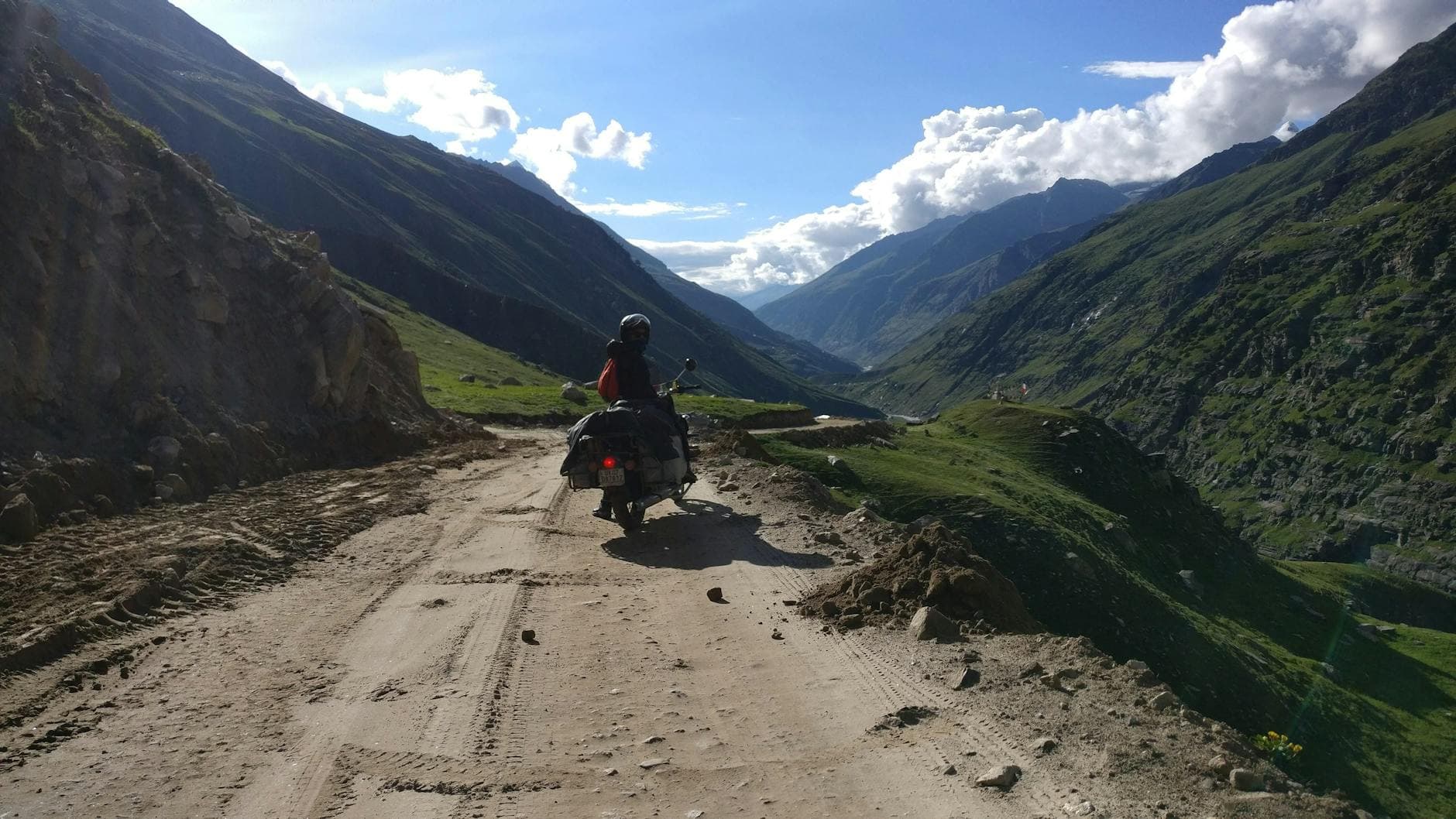
 Photo: Pixel9inja . / Pexels / Pexels License
Italy — Dolomites
The Dolomites — Stelvio, Gavia & the Great Alpine Passes
Key highlights
- Stelvio Pass (2,757m) — 48 numbered hairpins, the most photographed road in the Alps
- Gavia Pass (2,618m) — narrower and rougher than the Stelvio, open only June to October
- Mortirolo — 12.4km at 10.5% average gradient, the climb that broke Pantani
- Val Venosta and the Adige valley — fast, wide connecting roads through South Tyrol
- Passo del Tonale (1,883m) — a longer, quieter alternative approach to the Stelvio from the east
The Stelvio Pass is the road that gave motorcycling its most reproduced aerial photograph: 48 numbered hairpin bends stitched up a mountain face to 2,757 metres, each bend visible from the one above. It is the second-highest paved pass in the Alps and the highest in the Eastern Alps. If you ride one pass in Italy, ride this one. The 320km loop that connects the Stelvio to the Gavia, the Mortirolo, and the valley roads of South Tyrol makes for the best multi-pass day in the Italian Alps.
The Stelvio Pass
Bormio, a ski town in the Valtellina at 1,225 metres, is the natural starting point for the eastern approach to the Stelvio. The SS38 climbs immediately from the town, gaining 1,500 metres in roughly 25 kilometres via the 48 hairpins. The bends on the eastern side are numbered and well-marked; the surface is maintained to a high standard because the pass carries significant summer tourist traffic. Give yourself forty minutes for the ascent if you are not rushing — the hairpins reward a rhythm rather than a chase, and the views from the higher bends across the Val Venosta are worth a second to take in.
The summit at 2,757 metres has a cluster of hotels, souvenir shops, and a consistent queue of motorcycles. In July and August it can be busy enough at midday to make the descent on the western (Swiss-facing) side feel like a procession. A 7am start from Bormio clears the summit before the first tourist rush. The western descent drops toward Prato allo Stelvio and the Val Venosta at a similar gradient to the eastern ascent — 48 hairpins again, slightly wider, with the Ortler massif rising above you to the north.
The Gavia Pass
The Gavia (2,618m) climbs from Santa Caterina Valfurva, a small ski village east of Bormio accessible via the SS301. It is a harder road than the Stelvio in every dimension: narrower, rougher surfaced in places, with a central section that can retain loose grit into July. The tunnel near the summit is unlit and drips in wet weather. None of this is a reason not to ride it — the Gavia's severity is precisely what keeps it less crowded than the Stelvio, and the switchbacks above Ponte di Legno on the southern descent are technically excellent.
The Gavia is typically open from mid-June to October and closed in poor weather. Check conditions at the Ponte di Legno tourist office before committing. The pass pairs naturally with the Stelvio as a two-pass day: Stelvio in the morning, Gavia in the afternoon, overnight in Bormio or Livigno.
The Mortirolo
The Mortirolo is not a pass in the traditional sense but a cycling climb made famous by the Giro d'Italia and Marco Pantani. The ascent from Mazzo di Valtellina (the hardest approach) covers 12.4 kilometres at an average gradient of 10.5%, touching 18% on the steepest ramps. On a motorcycle it is a hill rather than a technical challenge, but the combination of gradient, narrow road, and the knowledge that this is one of the iconic climbs of professional cycling makes it worth the thirty minutes it adds to the loop.
South Tyrol and the Connecting Roads
South Tyrol — the German-speaking province of northern Italy — provides the fast, wide connecting sections that make the multi-pass loop manageable as a single day. The SS40 through the Val Venosta from Prato allo Stelvio to Merano is a straight valley road with good surfaces and light commercial traffic. From Merano, the SS38 south to Bolzano and then east toward Trento provides onward access to the Dolomiti road network — the Passo di Costalunga, the Passo Gardena, the Passo Pordoi — if you are extending the ride into a multi-day trip.
Practical Matters
Fuel is straightforward in the valley towns — Bormio, Merano, Bolzano, and Ponte di Legno all have stations. On the pass roads themselves there is no fuel above Bormio until the Swiss side (Müstair) or the Austrian side (Nauders). Fill up in Bormio before the Stelvio ascent.
The Stelvio is toll-free and open to motorcycles. The Gavia closes in winter (typically November to June) and in poor weather in any season. Temperatures at 2,757 metres on the Stelvio summit can be 15°C below the valley in summer — pack a mid-layer regardless of the forecast in Bormio. The descent on either side can be cold if you have been sitting in the sun at the summit for twenty minutes.
When to Go
Late June through September is the reliable window. The Stelvio can carry snow on the upper bends into mid-June in cold years; the Gavia is typically closed until mid-June. July and August bring the most motorcycle traffic — still manageable in early mornings — while September is the preferred month for many regulars: clearer skies, lower temperatures, and a return to quiet roads after the main holiday season ends. October is possible but the Gavia closes early if autumn weather arrives.
Where to Stay
Bormio, Prato allo Stelvio, Glorenza, and Naturns in South Tyrol all have accommodation suited to motorcycle touring. South Tyrolean hotels tend toward the Austrian guesthouse model — solid food, early breakfasts, communal drying rooms — which suits a riding week well. Browse biker-friendly places to stay in Northern Italy in our directory. The Stelvio loop connects naturally with the Innsbruck area in Austria for riders approaching from the north, and with Lake Garda for riders extending south.